3 June 2026
How to Unblock a Toilet (Without Making It Worse)
How to unblock a toilet safely with a plunger or a few household tricks, what never to do, and when to call a Newcastle plumber before it overflows.
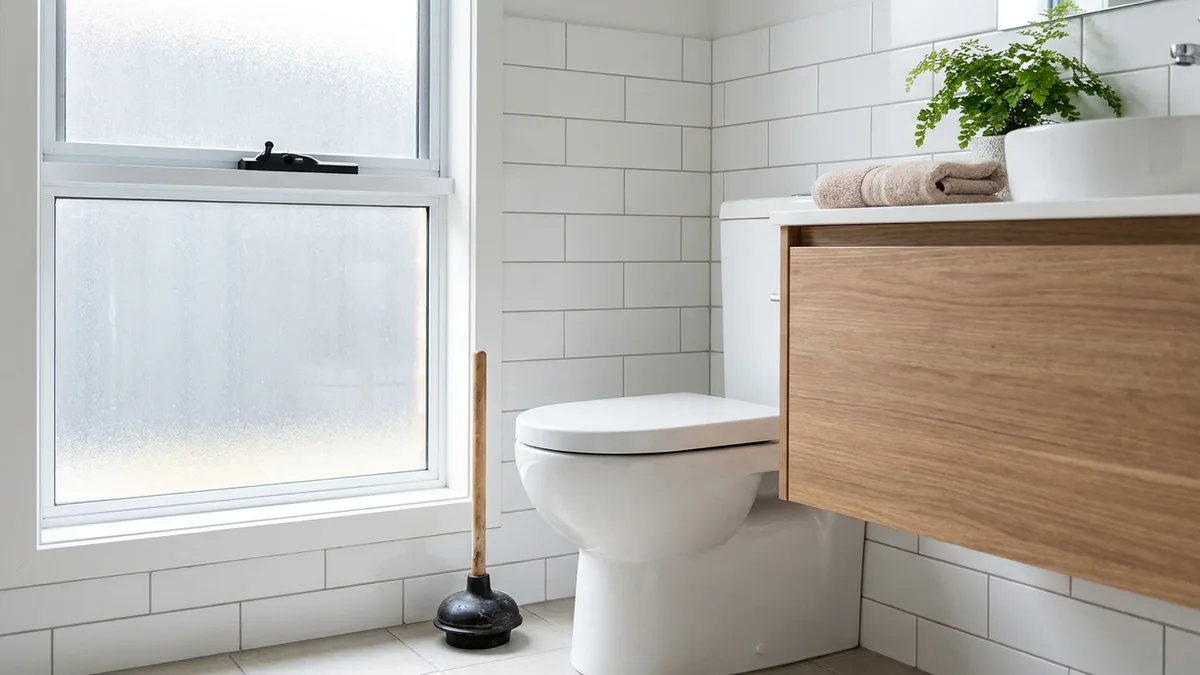
A blocked toilet is the one plumbing job you cannot put off, and it always seems to happen at the worst possible time. The good news is that most blockages are close to the surface and you can clear them yourself in a few minutes. This guide covers how to unblock a toilet properly, the tricks that work when you have no plunger, and the point where it is time to stop and call a plumber.
First, stop flushing
The moment the water rises instead of draining, take your hand off the button. Every extra flush adds another cistern of water with nowhere to go, and that is exactly how you end up mopping the floor. If the bowl is already near the rim, wait twenty minutes and the level will usually drop on its own as some water seeps past the blockage. That gives you room to work.
How to unblock a toilet with a plunger
A plunger shifts most toilet blockages if you use it properly. The trick is the seal, not brute force.
- Use a flange plunger (the type with a rubber lip that folds out), not the flat cup kind made for sinks.
- Make sure there is enough water in the bowl to cover the plunger head. If it is dry, add a jug of water, you want to push water at the blockage, not air.
- Lower the plunger in on an angle so you do not trap air under it, then seat it over the outlet.
- Push down gently first to get the seal, then pump firmly a dozen times, keeping the seal the whole time. The pull on the up-stroke matters as much as the push.
- Pull it off sharply on the last stroke. If the water drains away in a rush, you have cleared it. Give it a test flush.
If it works, run a bucket of water down to confirm the line is flowing freely before you trust it again.
No plunger? A couple of things that work
If you do not have a plunger handy, these are worth a try before you give up:
- Hot water and dish soap. Squirt a good amount of dishwashing liquid into the bowl, then pour in a bucket of hot (not boiling) water from waist height. Give it ten minutes. The soap lubricates and the warm water can soften a soft blockage enough to slip through. Never use boiling water, it can crack the porcelain.
- A toilet brush. Not glamorous, but pushing the brush head into the outlet and pumping it like a plunger can break up a blockage that is just out of reach.
What not to do
A few things make a blocked toilet worse, not better:
- Do not keep flushing to “force” it through. You will only flood the floor.
- Do not tip in caustic drain cleaner. It rarely shifts a real toilet blockage, it sits in the bowl as a hazard, and it can damage older pipes. We explain why in our guide on chemical drain cleaners.
- Do not poke at it with anything sharp like a coat hanger, you can scratch or crack the bowl.
When to call a plumber
If you have plunged it properly and it is still blocked, or it clears and then blocks again within a day or two, the problem is not in the toilet. It is further down the line, usually tree roots or a partial blockage in the sewer that several fixtures share. That is a job for a blocked toilet plumber with the right gear.
The same goes if more than one fixture is playing up, for example the toilet bubbles when you run the shower, or the floor waste gurgles when you flush. That points to a blocked drain in the main line, and no amount of plunging one fixture will reach it. We use a camera to find the exact cause, clear it, and tell you straight whether it is a one-off or something that needs a proper fix.
If you are in Newcastle and the plunger has not won, give us a call. We run a 24/7 service, quote a fixed price before we start, and leave the place clean.
Blocked drain right now?
Don't wait for it to get worse. We're a 24/7 local Newcastle service, fixed price from $89.